
Posted on Leave a comment

How to Choose an HRP Substrate for ELISA: TMB Substrate Selection Guide

What Is an HRP Substrate?

Horseradish peroxidase (HRP) is the most widely used enzyme label in immunoassays, including ELISA, lateral flow assays, and Western blots. To generate a detectable signal, HRP requires a substrate — a reagent that HRP oxidizes to produce a measurable color change, fluorescent signal, or chemiluminescent glow.

Choosing the right HRP substrate directly affects your assay’s sensitivity, dynamic range, and workflow. This guide focuses on soluble chromogenic substrates — the most common format for quantitative ELISA — and specifically on TMB (3,3′,5,5′-tetramethylbenzidine), the gold standard for HRP-based colorimetric detection.

Types of HRP Substrates: A Quick Overview

Not all HRP substrates are the same. Here is a summary of the major categories:

Substrate TypeSignalCommon UseDetection Range
TMB (chromogenic)Blue to Yellow (colorimetric)ELISA (plate-based)Broad; most widely used
OPD (chromogenic)Orange (colorimetric)ELISA (older format)Lower sensitivity than TMB
ABTS (chromogenic)Green (colorimetric)ELISA, lower sensitivity assaysModerate
pNPP (chromogenic)Yellow (colorimetric)Alkaline phosphatase (AP) assaysAP-specific
DAB (insoluble)Brown precipitateIHC, Western blotHigh contrast, permanent
ECL / LuminolChemiluminescentWestern blot, high-sensitivity ELISAVery high sensitivity

For quantitative plate-based ELISA, TMB is the preferred choice due to its excellent sensitivity, wide linear range, safety profile, and ease of use.

Why TMB Is the Gold Standard for ELISA

TMB has been the dominant HRP substrate in immunoassays since the 1980s for good reason. Compared to older substrates like OPD and ABTS, TMB offers higher sensitivity, producing a stronger signal per unit of HRP enzyme to enable detection of low-abundance analytes. It also provides a wider dynamic range with a linear response across a broad concentration range for accurate quantification. Unlike OPD (a suspected carcinogen), TMB is non-carcinogenic and safe to handle under standard lab conditions. Addition of sulfuric or phosphoric acid stop solution converts the blue reaction product to a stable yellow color read at 450 nm, and modern single-bottle TMB formulations are shelf-stable for 12+ months at refrigerated temperatures.

Single-Bottle vs. Two-Bottle TMB Substrate Systems

Two-Bottle (Two-Component) Systems

Traditional TMB kits include two separate reagents: a TMB concentrate (in DMSO or another organic solvent) and a peroxide/buffer solution that must be mixed immediately before use. While this approach can extend the shelf life of each component individually, it introduces variability from mixing errors, requires careful pipetting ratios, and adds steps to your workflow.

Single-Bottle (Ready-to-Use) Systems

Modern single-bottle TMB substrates come pre-formulated and ready to use — no mixing, no preparation. The TMB and peroxide are stabilized in a single solution optimized for consistent performance. This is the preferred format for high-throughput labs and routine ELISA workflows because it eliminates lot-to-lot mixing variability, reduces hands-on preparation time, minimizes pipetting errors, and provides consistent background and signal across runs.

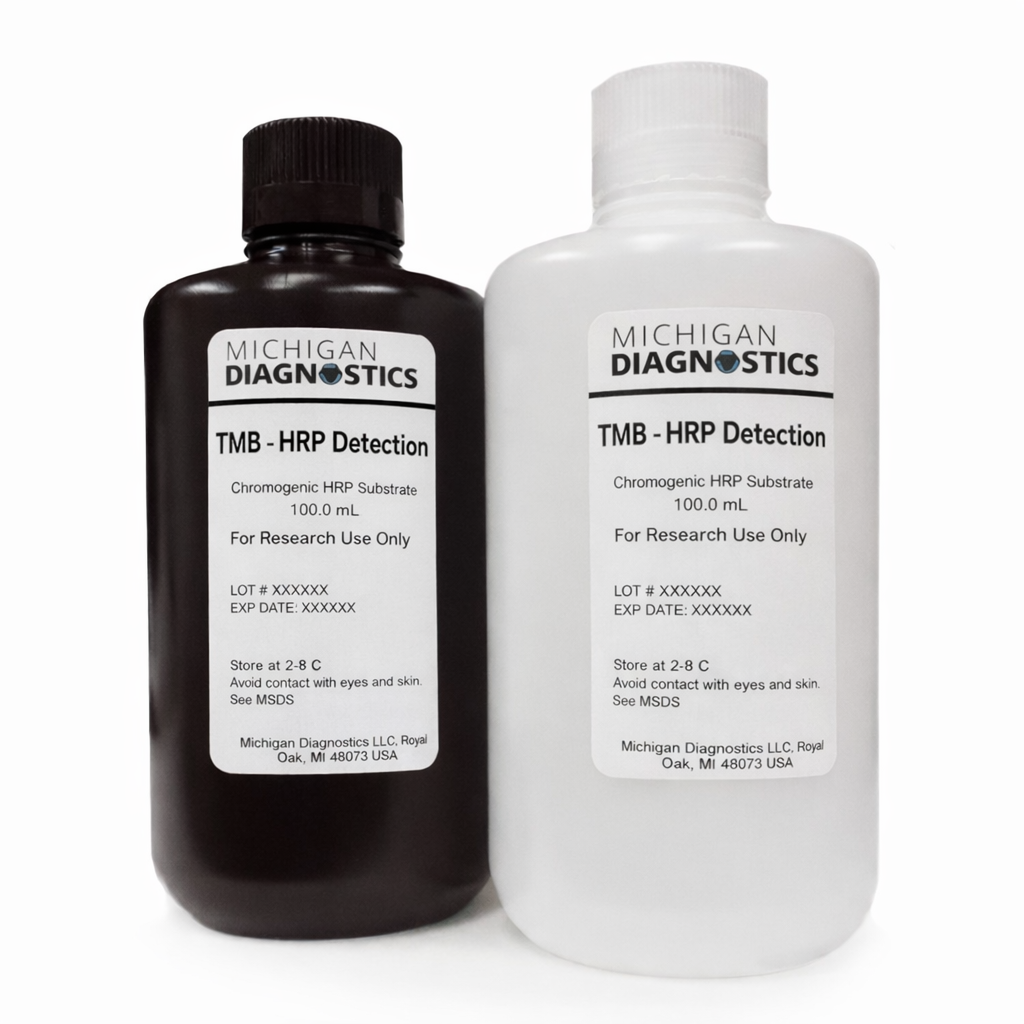
Michigan Diagnostics’ Single-Bottle Chromogenic HRP Substrate (TMB) is a ready-to-use, pre-formulated solution optimized for sandwich and competitive ELISA. No mixing required — just dispense, incubate, stop, and read.

Key Specifications to Compare When Choosing a TMB Substrate

When evaluating TMB substrates from different suppliers, pay attention to these critical parameters.

1. Detection Wavelength and Stop Solution Compatibility

All TMB substrates produce a blue color during the HRP reaction (peak absorbance at ~370 nm and ~652 nm). Adding an acid stop solution converts this to a stable yellow product read at 450 nm. Verify your substrate is compatible with standard sulfuric acid (H2SO4) or phosphoric acid (H3PO4) stop solutions to ensure full color conversion.

2. Sensitivity and Signal-to-Background Ratio

A high-quality TMB substrate should give a strong OD signal with minimal background on negative controls. Look for substrates validated on standard ELISA plate formats (Nunc MaxiSorp, Costar, etc.) and confirm that the dynamic range fits your analyte concentration range.

3. Shelf Life and Storage Conditions

Most quality TMB substrates are stable for 12 months when stored at 2–8°C, protected from light. Avoid substrates that require freezing — freeze-thaw cycles can degrade the peroxide component and reduce performance. Michigan Diagnostics’ TMB substrate is rated for 12-month stability at 2–8°C.

4. Solvent Composition (DMF/DMSO-Free)

Some TMB formulations use DMF (dimethylformamide) or DMSO (dimethyl sulfoxide) as co-solvents. While effective, these solvents add disposal considerations and can be irritating. Many labs prefer DMF/DMSO-free formulations for a simpler handling and waste stream profile.

5. Volume and Cost Per Test

TMB substrate is typically dispensed at 100 µL per well in a 96-well plate format. A 1000 mL bottle provides approximately 10,000 individual well reactions — enough for roughly 104 full plates. When comparing costs, calculate price per mL or price per 1000 wells to make an apples-to-apples comparison across suppliers. Michigan Diagnostics offers 1000 mL of ready-to-use TMB substrate at a significant savings compared to major catalog suppliers, with US manufacturing and a certificate of analysis (COA) included with every lot.

6. Regulatory and Quality Documentation

For regulated assay environments (clinical labs, GMP manufacturing, diagnostic kit production), confirm that your TMB substrate supplier provides a Certificate of Analysis (COA) with lot-specific QC data confirming performance, a Safety Data Sheet (SDS) required for lab safety compliance, US or ISO-compliant manufacturing important for supply chain reliability, and OEM/bulk options for kit manufacturers who need custom volumes or private-label packaging.

TMB Substrate Comparison: What the Major Suppliers Offer

The table below summarizes key features across commonly used TMB HRP substrate products:

SupplierFormatVolumeNotable Feature
Michigan DiagnosticsSingle-bottle, ready-to-use1000 mLUS-manufactured, COA included, OEM available, competitive pricing
ThermoFisher ScientificSingle-bottle (multiple formulations)Up to 1 LWide catalog selection; Ultra-TMB for higher sensitivity
Sigma-Aldrich (MilliporeSigma)Single-bottle100–500 mLCAS-referenced, catalog integration
AbcamSingle-bottle100–500 mLValidated in publications; detailed protocol support
MOSS BioMultiple formulations (HK, US, E, ES)Evaluation packs + bulkSpecialty formulations; extended stability on some products

Note: Pricing and availability subject to change. Contact suppliers directly for current quotes.

Step-by-Step Protocol: Using TMB Substrate in a Sandwich ELISA

Here is a general-purpose protocol for using ready-to-use TMB substrate in a standard sandwich ELISA.

  1. Equilibrate the TMB substrate to room temperature (18–25°C) for at least 30 minutes before use. Cold substrate can slow the reaction and reduce signal.
  2. Complete all prior ELISA steps — coat, block, primary antibody, wash, HRP-conjugated secondary antibody, final wash. Ensure plates are thoroughly washed to remove unbound HRP conjugate before adding substrate.
  3. Dispense 100 µL of TMB substrate per well. Use a multichannel pipette or liquid handler for consistency across the plate.
  4. Incubate at room temperature in the dark for 5–30 minutes, depending on assay sensitivity requirements. Monitor color development — a gradient of blue color should appear in positive wells.
  5. Stop the reaction by adding 100 µL of 0.5 M H2SO4 (sulfuric acid stop solution) or 1 M H3PO4 (phosphoric acid) per well. The solution will turn from blue to yellow immediately.
  6. Read absorbance at 450 nm within 30 minutes of stopping the reaction. Use a 620 nm or 630 nm reference wavelength subtraction if your plate reader supports dual-wavelength reading to correct for optical imperfections.

Troubleshooting Common TMB Substrate Issues

High Background / Blue Color in Negative Controls

This usually indicates insufficient washing before substrate addition. Ensure your wash buffer contains 0.05% Tween-20, perform at least 3–5 wash cycles, and aspirate wells completely between washes. It can also indicate TMB substrate contaminated with metal ions — use clean pipettes and avoid contact with metal instruments.

Weak or No Signal in Positive Controls

Check that your TMB substrate has not expired and has been stored correctly (2–8°C, away from light). Confirm HRP conjugate activity with a separate control. Ensure substrate was equilibrated to room temperature before use. If the substrate appears blue in the bottle before use, it has been oxidized and should be discarded.

Incomplete Color Conversion After Stop Solution

If wells remain blue or greenish after adding stop solution, the acid may be too dilute or the stop solution volume may be insufficient. Ensure you are using the correct stop solution concentration and that it is thoroughly mixed into each well by gently tapping the plate.

Substrate Turned Blue Before Use

TMB substrate naturally oxidizes over time, especially if exposed to light, heat, or metal contamination. A lightly blue-tinted substrate may still be usable but will show elevated background. Deeply blue substrate should be discarded. Always store tightly capped at 2–8°C and avoid introducing contaminants by using clean, disposable plasticware.

Frequently Asked Questions About TMB HRP Substrates

Can I use TMB substrate for Western blots?

No — soluble TMB is formulated for plate-based ELISA only. For Western blots, use an insoluble HRP substrate such as DAB (diaminobenzidine) for chromogenic detection, or an ECL (enhanced chemiluminescence) substrate for luminescent film or digital imaging detection.

What stop solution should I use with TMB?

The most common stop solution is 0.5 M sulfuric acid (H2SO4). Phosphoric acid (1 M H3PO4) is also commonly used and produces a slightly more stable yellow color. Do not use HCl — hydrochloric acid can cause precipitation rather than a clean color shift.

How long is TMB substrate stable once opened?

Properly stored (capped, refrigerated at 2–8°C, protected from light), opened TMB substrate remains stable until its labeled expiration date. Avoid contamination by using clean, dedicated pipettes and never returning unused substrate to the original bottle.

Can I use TMB substrate for lateral flow or point-of-care assays?

Soluble TMB is not typically used in lateral flow strips — those platforms use colloidal gold or latex particle labels rather than enzyme-based detection. However, TMB can be used in membrane-based dot-blot or slot-blot assays.

Is TMB safe to handle?

TMB is considered non-carcinogenic and relatively safe compared to older chromogenic substrates like OPD. Standard laboratory precautions apply — gloves, eye protection, and proper disposal per your institution’s chemical waste guidelines. Always refer to the SDS for your specific product.

Ready to Order? Michigan Diagnostics TMB Substrate

Michigan Diagnostics manufactures a high-quality, single-bottle TMB HRP substrate in the USA, available in 1000 mL volume. It is ready-to-use with no mixing required, optimized for sandwich and competitive ELISA formats, detected at 450 nm after acid stop, stable at 2–8°C for 12 months, US-manufactured with Certificate of Analysis (COA) included, and available for OEM and bulk supply for kit manufacturers with fast 2–3 day shipping.

View Product and Order Now

Posted on Leave a comment

Alpha, Beta, and Gamma Cyclodextrins: Choosing the Right Derivative for Your Application

Introduction

Cyclodextrins come in three primary forms — alpha (α), beta (β), and gamma (γ) — each with distinct cavity dimensions, solubility characteristics, and optimal applications. Selecting the correct cyclodextrin for your inclusion complex requires understanding these fundamental differences and matching the guest molecule geometry to the host cavity.

Michigan Diagnostics manufactures all three native cyclodextrins and their key derivatives, supplying research and industrial customers from our Royal Oak, Michigan facility since 1998. This guide provides a practical framework for selecting the right cyclodextrin for your specific application.

Structural Comparison: Alpha, Beta, and Gamma Cyclodextrins

Alpha cyclodextrin consists of 6 glucose units with a cavity diameter of 4.7–5.3 Å and molecular weight of 972 Da. Its water solubility is 145 g/L at 25°C. Beta cyclodextrin consists of 7 glucose units with a cavity diameter of 6.0–6.5 Å and molecular weight of 1135 Da. Its water solubility is 18.5 g/L at 25°C — the lowest of the three native forms, driving demand for solubilized derivatives like HPBCD. Gamma cyclodextrin consists of 8 glucose units with a cavity diameter of 7.5–8.3 Å and molecular weight of 1297 Da. Its water solubility is 232 g/L at 25°C — the highest of the three.

Alpha Cyclodextrin: Applications and Strengths

Alpha cyclodextrin’s smaller cavity makes it ideal for encapsulating linear aliphatic chains, small aromatic compounds, and fatty acid derivatives. Its primary applications include dietary fiber supplementation and functional food ingredients, emulsification and stabilization of fatty acid-based food ingredients, encapsulation of linear chain molecules including certain preservatives and vitamins, and cholesterol reduction in food products.

Alpha cyclodextrin has received particular attention as a dietary fiber ingredient due to its resistance to human digestive enzymes, its prebiotic effect on gut microbiota, and regulatory approval in both the US (FDA GRAS) and Europe (EFSA Novel Food). Demand for alpha cyclodextrin in nutraceutical applications has grown 11% over 2022–2024 as functional food manufacturers seek clean-label fiber ingredients.

Beta Cyclodextrin: The Most Versatile Platform

Beta cyclodextrin dominates global cyclodextrin demand with approximately 48% market share due to its ideal cavity size for a broad range of pharmaceutical and industrial guest molecules. Its 6.0–6.5 Å cavity accommodates many drug molecules, fragrance compounds, and chemical intermediates with high complexation efficiency.

The relatively low water solubility of native β-CD (18.5 g/L) has driven extensive development of solubilized derivatives. The key beta cyclodextrin derivatives include hydroxypropyl-β-cyclodextrin (HPBCD) for pharmaceutical and parenteral formulations, sulfobutyl ether-β-cyclodextrin (SBE-β-CD) for injectable drug products, randomly methylated β-cyclodextrin (RAMEB) for pharmaceutical and food applications, and sulfated β-cyclodextrin for chiral separations in analytical chemistry.

Gamma Cyclodextrin: The Specialist for Large Molecules

Gamma cyclodextrin’s larger 7.5–8.3 Å cavity enables encapsulation of larger guest molecules that cannot be accommodated by alpha or beta cyclodextrin. Its naturally high water solubility (232 g/L) makes it attractive for applications where aqueous compatibility is critical.

Key gamma cyclodextrin applications include encapsulation of large aromatic compounds and steroids, formulation of fat-soluble vitamins (A, D, E, K) for food and nutraceutical applications, probiotic encapsulation with survivability improvements of up to 25% during storage, gene delivery systems and nucleic acid complexation, and biopharmaceutical formulations for sensitive biologics requiring gentle complexation conditions.

Gamma cyclodextrin consumption in dietary supplement products increased 17% in 2024, reflecting growing demand for functional ingredients that improve bioavailability of fat-soluble nutrients without the use of synthetic emulsifiers.

How to Choose: A Practical Decision Framework

Step 1 — Match cavity size to guest molecule geometry. Small linear molecules or short aliphatic chains: consider alpha cyclodextrin. Medium-sized aromatic drugs and most pharmaceutical APIs: beta cyclodextrin or derivatives. Large aromatic molecules, steroids, vitamins, or biologics: gamma cyclodextrin.

Step 2 — Consider aqueous solubility requirements. If high aqueous solubility is critical (particularly for injectable formulations), choose HPBCD or SBE-β-CD over native beta cyclodextrin.

Step 3 — Consider regulatory requirements. For FDA-regulated drug products, verify the cyclodextrin derivative has appropriate regulatory support for your intended route of administration. HPBCD and SBE-β-CD have the strongest parenteral regulatory support.

Step 4 — Consider the application context. For chiral separations: sulfated cyclodextrins. For food applications: native alpha, beta, or gamma CD (all GRAS). For pharmaceutical research: HPBCD as a first-line screening tool due to its broad utility and safety profile.

Why Michigan Diagnostics for All Three Cyclodextrin Types

Michigan Diagnostics is one of the few US-based manufacturers offering the complete range of alpha, beta, and gamma cyclodextrins along with their key derivatives from a single domestic supplier. This offers your team a single point of contact for all cyclodextrin needs, consistent quality documentation and lot-to-lot reproducibility, no import delays or customs complications, flexible quantities from milligram research scale through kilogram production quantities, and custom synthesis for specialized derivatives not available off the shelf.

Conclusion

Selecting the right cyclodextrin begins with understanding the structural requirements of your guest molecule and the performance demands of your application. Alpha cyclodextrin excels in food and nutraceutical applications. Beta cyclodextrin and its derivatives dominate pharmaceutical formulation. Gamma cyclodextrin offers unique advantages for large molecule complexation and biologics formulation.

Michigan Diagnostics supplies all three native cyclodextrins and their derivatives with full analytical documentation, from our US manufacturing facility. Browse our complete cyclodextrin catalog or contact our technical team for application guidance at michdiag.com.

Meta Description: Not sure which cyclodextrin to use? This guide compares alpha, beta, and gamma cyclodextrins — their cavity sizes, solubility, applications, and key derivatives — to help you select the right product for your research or formulation.

Posted on Leave a comment

Hydroxypropyl Beta Cyclodextrin (HPBCD): The Gold Standard Excipient for Drug Solubility Enhancement

Introduction

Hydroxypropyl-β-cyclodextrin (HP-β-CD, HPBCD) has emerged as the premier cyclodextrin derivative for pharmaceutical applications, now present in dozens of FDA-approved drug products and featured prominently in formulation strategies for injectable, oral, and ophthalmic drug delivery systems.

Unlike native beta cyclodextrin, HPBCD offers significantly improved water solubility (greater than 600 mg/mL), reduced toxicity, and superior inclusion complex stability — making it suitable for parenteral administration where native β-CD is not. Michigan Diagnostics supplies pharmaceutical-grade HPBCD with full COA documentation, shipped from our US facility within 2–3 business days.

What Makes HPBCD Different from Native Beta Cyclodextrin?

The hydroxypropyl substitution introduces hydroxypropyl groups onto the hydroxyl positions of the cyclodextrin ring, fundamentally altering its physicochemical properties. Key improvements include water solubility increasing from approximately 18.5 g/L (native β-CD) to over 600 g/L (HPBCD), dramatically reduced renal toxicity compared to native β-CD, improved inclusion complex stability across pH ranges, and compatibility with parenteral administration routes including intravenous and intramuscular.

The degree of substitution (DS) — the average number of hydroxypropyl groups per glucose unit — significantly influences complexation efficiency and solubility. Michigan Diagnostics offers HPBCD with characterized DS values and provides full NMR and analytical data with every shipment.

Key Applications of HPBCD

Parenteral Drug Formulations

HPBCD is the cyclodextrin of choice for injectable formulations due to its excellent safety profile and high aqueous solubility. It has been used to solubilize antifungal agents (notably voriconazole in Vfend IV), corticosteroids for ophthalmic use, cardiovascular drugs, and anesthetic compounds. The ability to formulate previously insoluble APIs as IV solutions has opened significant therapeutic opportunities.

Niemann-Pick Disease Type C Treatment

One of the most compelling emerging applications of HPBCD is in the treatment of Niemann-Pick Disease Type C (NPC1), a rare lysosomal storage disorder characterized by pathological cholesterol accumulation. The FDA granted orphan drug designation to HP-β-CD for NPC1, and clinical trials demonstrated significant therapeutic benefit. This application has driven substantial research interest in HPBCD as both a therapeutic agent and formulation excipient.

Ophthalmic Drug Delivery

HPBCD-based eye drop formulations achieve drug concentrations 25 times greater than conventional formulations for certain corticosteroids, with sustained release profiles extending beyond 6 hours. This dramatically improves therapeutic efficacy while reducing dosing frequency for patients with chronic ocular conditions.

Oral Bioavailability Enhancement

For BCS Class II and IV compounds — drugs with poor water solubility — HPBCD inclusion complexes can increase dissolution rates and oral bioavailability by 3–10 times. This is particularly valuable during early formulation development when API supply is limited and rapid bioavailability data is needed for go/no-go decisions.

Cholesterol Depletion in Research

HPBCD is widely used in cell biology research as a cholesterol-depleting agent for studying lipid raft function, membrane dynamics, and cholesterol-dependent signaling pathways. It selectively extracts cholesterol from cell membranes in a concentration and time-dependent manner, making it an essential research tool for membrane biology studies.

Regulatory Status of HPBCD

HPBCD has a well-established regulatory profile supporting its use across multiple administration routes. It is listed in the FDA Inactive Ingredients Database for oral, ophthalmic, and parenteral use. The European Pharmacopoeia includes HPBCD as an official monograph excipient. It has GRAS status for food applications and orphan drug designation for NPC1 treatment.

Why Source HPBCD from Michigan Diagnostics?

For formulation scientists and procurement teams evaluating HPBCD suppliers, Michigan Diagnostics offers compelling advantages over European or Asian alternatives:

No import lead times — domestic US shipment within 2–3 business days versus 2–4 week international lead times from European suppliers. Full analytical documentation with every lot — COA including purity by HPLC, NMR confirmation, degree of substitution, water content, and residual solvents. Flexible quantities from 100mg through kilogram scale with no minimum order requirement. Technical support from the manufacturing chemists — direct access to the team that synthesized the product. Custom DS specifications available for research programs requiring specific substitution profiles.

Conclusion

Hydroxypropyl beta cyclodextrin has become the formulation excipient of choice for solubility-challenged APIs across pharmaceutical development and commercial manufacturing. Its exceptional safety profile, high water solubility, and versatility across administration routes make it irreplaceable in modern drug formulation.

Michigan Diagnostics supplies research and pharma-grade HPBCD with full documentation, fast domestic shipping, and direct technical support. Request a quote or place an order today at michdiag.com.


Meta Description: Hydroxypropyl beta cyclodextrin (HPBCD) is the leading pharmaceutical excipient for drug solubility enhancement. Learn about its applications, regulatory status, and why sourcing from Michigan Diagnostics gives your formulation team a competitive advantage.

Posted on Leave a comment

Beta Cyclodextrin: Applications, Derivatives, and Why US-Manufactured Quality Matters

Introduction

Beta cyclodextrin (β-CD) is the most widely used member of the cyclodextrin family, accounting for nearly half of global cyclodextrin market demand. Its unique toroidal structure — a hydrophilic exterior with a hydrophobic interior cavity — makes it an exceptionally versatile molecular encapsulation tool across pharmaceutical formulation, food science, cosmetics, and analytical chemistry.

At Michigan Diagnostics, we have been manufacturing pharmaceutical-grade beta cyclodextrin and its derivatives from our Royal Oak, Michigan facility since 1998. In this post we cover the key applications of β-CD and explain why sourcing from a US-based manufacturer offers distinct advantages for research and production teams.

What is Beta Cyclodextrin?

Beta cyclodextrin is a cyclic oligosaccharide composed of seven glucose units linked by α-1,4-glycosidic bonds. Its cavity diameter of approximately 6.0–6.5 Å is ideal for encapsulating a wide range of small molecule guests, particularly poorly water-soluble APIs (active pharmaceutical ingredients). The β-CD ring can improve drug solubility by 5–10 times compared to unformulated compounds, making it one of the most important excipients in modern pharmaceutical development.

Key Applications of Beta Cyclodextrin

1. Pharmaceutical Drug Formulation

Beta cyclodextrin and its derivatives — particularly hydroxypropyl-β-cyclodextrin (HPBCD) and sulfobutyl ether-β-cyclodextrin (SBE-β-CD) — are FDA-recognized excipients used in numerous approved medications. Their primary role is solubility enhancement of poorly water-soluble drugs, which represent approximately 40% of new drug candidates in development pipelines.

Key pharmaceutical applications include oral bioavailability enhancement, parenteral formulations, ophthalmic drug delivery, and topical drug delivery systems. Beta cyclodextrin inclusion complexes protect active ingredients from degradation, reduce gastrointestinal irritation, and enable controlled release profiles that improve patient outcomes.

2. Food and Beverage Industry

Alpha, beta, and gamma cyclodextrins are all GRAS (Generally Recognized As Safe) listed by the FDA, enabling broad food industry use. Beta cyclodextrin is used for cholesterol removal from dairy products and eggs, flavor encapsulation and controlled release, shelf-life extension of volatile flavor compounds, and fat reduction in processed foods. The European Commission has also approved cyclodextrins as novel food ingredients, supporting global food manufacturing applications.

3. Analytical Chemistry and Chiral Separations

Cyclodextrins are widely used as chiral selectors in capillary electrophoresis (CE) and HPLC for enantiomeric separations. Derivatized beta cyclodextrins — including sulfated, methylated, and acetylated variants — offer tunable selectivity for a broad range of chiral analytes. This makes them indispensable tools in pharmaceutical quality control, environmental analysis, and food safety testing.

4. Cosmetics and Personal Care

Beta cyclodextrin is used in cosmetic formulations to stabilize fragrance compounds, encapsulate active skincare ingredients, reduce skin irritation from harsh actives, and improve product shelf life. Major cosmetic manufacturers incorporate cyclodextrin complexes into premium skincare and personal care lines.

5. Environmental Remediation

Modified beta cyclodextrins have demonstrated effectiveness in soil and water remediation applications, capturing persistent organic pollutants (POPs), heavy metals, and hydrophobic contaminants through inclusion complex formation. This emerging application is driving new research investment globally.

Why Michigan Diagnostics for Beta Cyclodextrin?

When sourcing cyclodextrin derivatives for research or production, the manufacturer matters. Here is why researchers and formulators choose Michigan Diagnostics:

US-Based Manufacturing: Our Royal Oak, Michigan facility ships domestically, eliminating import delays, customs uncertainty, and long international lead times. Most orders ship within 2–3 business days.

Founded in 1998: Over 25 years of biochemical manufacturing expertise. We have supplied pharmaceutical companies, academic research institutions, and industrial customers with consistent, reliable product quality.

Full Analytical Documentation: Every order ships with a Certificate of Analysis (COA) including purity data, NMR confirmation, and degree of substitution data for derivatives. No guesswork.

Flexible Order Quantities: From 100mg feasibility quantities through multi-kilogram production batches, we scale with your project needs without minimum order constraints.

Custom Synthesis Available: Need a specific degree of substitution, a rare derivative, or a custom modification? Our chemistry team provides same-day quotes on custom synthesis requests.

Direct Technical Support: You are buying from the chemists who make the product. Questions about purity, compatibility, or application suitability get real answers fast — not a call center script.

Conclusion

Beta cyclodextrin and its derivatives remain among the most versatile and valuable tools in pharmaceutical formulation, food science, analytical chemistry, and beyond. Whether you need research-scale quantities for early feasibility work or bulk quantities for production, Michigan Diagnostics provides the quality, documentation, and domestic supply chain reliability your project demands.

Browse our beta cyclodextrin catalog or contact us for a custom synthesis quote at michdiag.com.

Meta Description: Learn about beta cyclodextrin applications in pharmaceuticals, food science, and analytical chemistry — and why sourcing from a US manufacturer like Michigan Diagnostics ensures quality, speed, and reliability.

Posted on Leave a comment

Complete Guide to Chemiluminescent Western Blotting

Introduction to Chemiluminescent Western Blotting

Chemiluminescent Western blotting is the gold standard for protein detection in molecular biology research. This comprehensive guide covers everything you need to know about chemiluminescent detection systems, including substrate selection, optimization, and troubleshooting.

What is Chemiluminescence?

Chemiluminescence is a light-emitting chemical reaction used to detect proteins on Western blot membranes. The process involves enzyme-conjugated antibodies (typically HRP or alkaline phosphatase) that catalyze the oxidation of luminol-based substrates, producing light that can be captured on film or digital imagers.

Types of Chemiluminescent Substrates

HRP Substrates

Horseradish peroxidase (HRP) substrates are the most common detection reagents for Western blotting:

  • Entry-Level: PicoGlow substrates offer basic sensitivity at economical prices
  • High-Sensitivity: FemtoGlow substrates detect femtogram quantities of protein
  • Extended Signal: Substrates with stabilizers maintain signal for hours

Alkaline Phosphatase (AP) Substrates

AP substrates like AttoGlow offer advantages for certain applications:

  • Attogram-level sensitivity with enhancer reagents
  • No interference from endogenous peroxidases
  • Longer signal stability (2+ hour plateaus)
  • Compatible with stripping and reprobing

Optimizing Western Blot Detection

Choosing the Right Substrate

Substrate selection depends on target protein abundance:

  • High abundance proteins: Entry-level substrates (PicoGlow)
  • Medium abundance: Standard FemtoGlow substrates
  • Low abundance: Enhanced sensitivity substrates (FemtoGlow Plus, AttoGlow with enhancer)

Common Issues and Solutions

High Background: Use low-background formulations, optimize blocking buffer, reduce antibody concentrations

Weak Signal: Increase antibody concentration, extend incubation times, use higher sensitivity substrate

Uneven Signal: Ensure even transfer, adequate membrane wetting, proper washing

Best Practices

  • Always use fresh substrate (stable 45 days after opening for most formulations)
  • Store proteins at -20°C to maintain activity
  • Use appropriate membrane type (PVDF for proteins >20 kDa, nitrocellulose for <20 kDa)
  • Document exposures at multiple time points
  • Include positive and negative controls

Shop Chemiluminescent Substrates

Michigan Diagnostics offers a complete line of chemiluminescent substrates for Western blotting, including our flagship FemtoGlow HRP substrates and AttoGlow AP substrates. All products are manufactured in the USA with FDA-compliant quality systems.

Posted on Leave a comment

FemtoGlow vs AttoGlow: Which Chemiluminescent Substrate is Right for Your Western Blot?

Comparing FemtoGlow and AttoGlow Substrates

Choosing between FemtoGlow HRP substrates and AttoGlow AP substrates depends on your specific Western blotting needs. This comparison guide helps you select the optimal detection system for your research.

FemtoGlow HRP Substrates

Best For:

  • Standard Western blotting protocols
  • High-throughput screening
  • Budget-conscious laboratories
  • ELISA and chemiluminescent immunoassays

Advantages:

  • Fast signal development (1-5 minutes)
  • Compatible with all standard HRP-conjugated antibodies
  • Economical for routine applications
  • Available in single-bottle or two-bottle formats

Sensitivity Range:

Femtogram to picogram detection depending on formulation

AttoGlow AP Substrates

Best For:

  • Ultra-low abundance proteins (attogram detection)
  • Multiplexing experiments
  • Membrane stripping and reprobing
  • Applications requiring extended signal stability

Advantages:

  • Attogram-level sensitivity with enhancer
  • Extended signal plateau (2+ hours)
  • No endogenous peroxidase interference
  • Available in 450nm and 540nm emission variants

Sensitivity Range:

Attogram to femtogram detection with enhancer reagents

Side-by-Side Comparison

Feature FemtoGlow (HRP) AttoGlow (AP)
Sensitivity Femtogram Attogram
Signal Duration 30 min – 2 hours 2+ hours
Development Time 1-5 minutes 25-45 minutes
Price Point Economy Premium

Making Your Choice

Choose FemtoGlow if: You need fast, reliable detection for medium-to-high abundance proteins with standard HRP workflows

Choose AttoGlow if: You require maximum sensitivity for rare proteins or plan to strip and reprobe membranes

Order Samples

Not sure which substrate is right for you? Contact us to request trial sizes of both FemtoGlow and AttoGlow substrates.